Friday, April 29, 2005

Lesson 8 Study Journal

We can use prototype in different areas, such as reveal technical issues, display work flow and task design.

Using a prototyping in illustration of business process is a method to verify whether a system working well. This method is visual, which is suitable for people to discuss.
The other advantage of prototyping is that it shows the interface of every component, so that designer understands the interaction from each part simply.

Why use prototyping
  • Easy for evaluation and getting feedback

  • Presentation to investor

  • An aid for members to communicate

  • Test of new ideas


Case Study
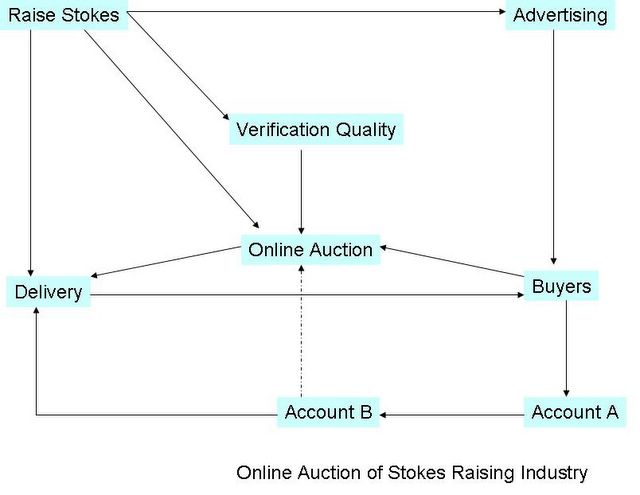
Here is the relationship of the auction system

Auction Map

Thursday, April 14, 2005

Lesson 7 Study Journal

This lesson is about management of change. Change is constant. In EDCF, change describes in Change/Agency, while Universal Business Model categories change in Influences and Performance mostly. Risk and opportunity come from change.


Change comes from:

Great Idea: It is a new model, new process, and new method to handle business
Improvement: It is a modification of existing infrastructure, business process, software, and interface etc.
Sudden Event: Such as 9/11, Asia Tsunami, financial market crash
New Technology: Internet, mobile commerce, eyes/finger print check and GPS etc.

Small Business Disaster Recovery Strategy
Small business will spend less money on DR compared to large company; meanwhile small business has less data to protect.

Two main solutions to DR are Tape back up system and Host-based replication system.
Host system is able to physically distribute the data in different place, but more expensive than Tape. These two solutions can be used together. (Mike Talon, 2004)

If the data is kept on back up, the space in disk will become less and less, it is impossible to store all the data. So a clarification and deletion is necessary in back up management.


Reference:
http://techrepublic.com.com/5100-6350-5294982.html#

Friday, April 01, 2005

Lesson 6 Study Journal

This lesson is about designing interface between different parts of the business system. Again, we should consider the existing interface first, what we do is modifying or creating a small part of the interrelation. After that we should be able to evaluate the whole EDCF system.

Opera Analysis
Performance of Opera is providing a platform for act. The light, sound effect decorate is the internal infrastructure, and the traffic system, ticket selling network and human management could be external infrastructure. How to manage of renting of Opera, deal with proposal and get benefit is the business model. There are lots of famous stages in China, how to attract actor and audience is the main issue of agencies.


There should be several systems in Opera, such as proposal evaluation system, infrastructure management system, advertising system and market research system etc.
In order to evaluate a project, data should be collected in different system, to decide whether invent on a proposal. When the ticket starts to sell, infrastructure system calls for advertising system to do promotion. Advertising system replies on market research system data, niche market and target the audience. The market research system should acquire the data from infrastructure system to reevaluate and rearrange the performance process.

Friday, March 18, 2005

Lesson 5 Study Journal

From the Dowding(2001) ‘Universal Business Model’, it is easy to catch the conceptual design of a business/organization/enterprise. Every component of the business has been analysis, which reveals the advantage and disadvantage of the current business.

Ten aspects of the ‘Universal Business Model’

  • Identity (Name, Constitution, Reputation, Impact)
  • Purpose (Raison d'etre, Core values, Vision, Mission, Key policy, Target Market)
  • Structure (Physical deployment, Functional composition, Roles and jobs, Workplaces, Reporting structure, External infrastructure)
  • Participants (Owners, Managers, Workers, Channel, Customers, Suppliers,Partners, Neighbours, Indirect participants)
  • Enablers (Land and buildings, Technology, Intellectual property, information, Skills, Core competencies, Relationships, Financial resources)
  • Activities (Line-of-business, Support, Management, Compliance, Incidental)
  • Deliverables (Products, Services)
  • Influences (Constraints and pressures, Risk and threats, Opportunities, competitors)
  • Culture (Management style, Rules and customs, Social behaviour, Attitude to work, Benefits and perks, Personal development)
  • Performance (Scale, Efficiency, Empathy, Innovation, Financial)

    The architecture of a system defines its basic components and important concepts and describes the relationships among them. (Treese, G., and Stewart L., 2002, Designing Systems for Internet Commerce
  • http://www.serissa.com/Commerce/architecture.pdf )

    Dowding, 2001, ‘The Universal Business Model’ http://www.howarddowding.com

    Lesson 4 Study Journal

    Many systems have already existed in a business. When we begin to apply an idea in a business, we should consider these existed systems. What we do in system design is modifying some of the systems, or creating a new system. The whole system has been adjusted to contain a new function, and insure this function work properly.

    A process to system design

  • Define a problem

  • Collect data and evidence

  • Redefine purpose

  • Design system

  • This is a remodel process in system develop life cycle.

    Create a BLOG is easy, and BLOG is very useful. I have applied for two BLOG, one is in Chinese and the other is in English.
    I choose the English BLOG eventually, because it is hard to connect my Chinese BLOG, and the view of my English BLOG is better and it is full of functions, such as changing the template by writing code.
    I can look at other people’s BLOG one after one by a click. It just like change the channel on TV, you will not know what subject comes out in the next channel. This is a free experience, like shopping, you can come across so many new items.

    Lesson 1 Study Journal

    This course is about how to structure a business idea, use model to simplify relationship in cooperation. We usually draw picture to detail the design. By using picture, we can discuss issues occurred in practicing an idea, let people know how a company works.
    There are two things I do not understand in Learning Guide. Some references behind each lesson do not include a chapter or page. Whether I have to read the whole book, or just pick up a related part to read? Another thing is I can not find one book (Norman, D. A, 1995) in Swinburne library, and this book is referred by many lessons. It is an important book, but where can I find it?

    Some concepts explain below:

    Model. A prototype or surrogate of a complex situation. It can be a physical model, such as an architectural model of urban design, or a mathematical model of interactions of many variables. It is used in simulations for relating various components together or can be a stand alone tool to evaluate different approaches using different assumptions. Recent use of personal computer tools allows many types of software to effectively answer questions such as "what if I increase the growth rate"; these too are models. http://ag.arizona.edu/futures/home/glossary.html

    System development life cycle (SDLC). In this cycle, systems are developed, used, modified, redeveloped, used, modified, and so forth. Many systems in use today have been through this process dozens of times and are, tracing back through all their versions, 25 or 30 years old.
    (Kroenke D., Hatch, R. 1994, Management Information System, third edition, P24.)

    Wednesday, March 16, 2005

    Lesson 3 Study Journal

    Four I’s concept

    • Intuitive: business should be perspective, having the knowledge of what the customer need, foreseeing how the market will change.

    • Informative: a design should include an instruction. Keep the instruction easy and simple for user to apply. Tell user what should be caution in using the product.

    • Inclusive: a design should clarify its target consumer by its physical property, common sense symbol etc.

    • Innovative: design a new way to solve problem based on technology, new process and system.


    Value Proposition:
    One product has different value in customer’s view of point, because needs from customer is different. The price represents value in the form of money
    Notes: Price = Value = Need

    Mental Model
    Every people has his/her own knowledge. When people come across new product or design, he/she learns how to use this product or understand a concept based on former knowledge. This knowledge is called metal model.

    System
    It includes input, process and output. In system, we value system thinking and concentrate on system design. Every business is a system, EDCF is the blueprint to construct a business system.

    Lesson 2 Study Journal

    There are four components within EDCF (Enterprise design conceptual framework):


    • Performance: it is about setting up a goal, and measuring how to achieve the goal.

    • Infrastructure: it is the technology enterprise can use and engage inside, such as mobile phone, Internet and GPS.

    • Business models: it is a framework to guide a company working well. This framework includes detailed information about every element’s property and how they interact.

    • Change & Agencies: power or force comes from the environment. Enterprise should adjust itself in order to survive.


    EDCF helps to develop a company clearly. Also it illustrates the whole business of a company to an entrepreneur.